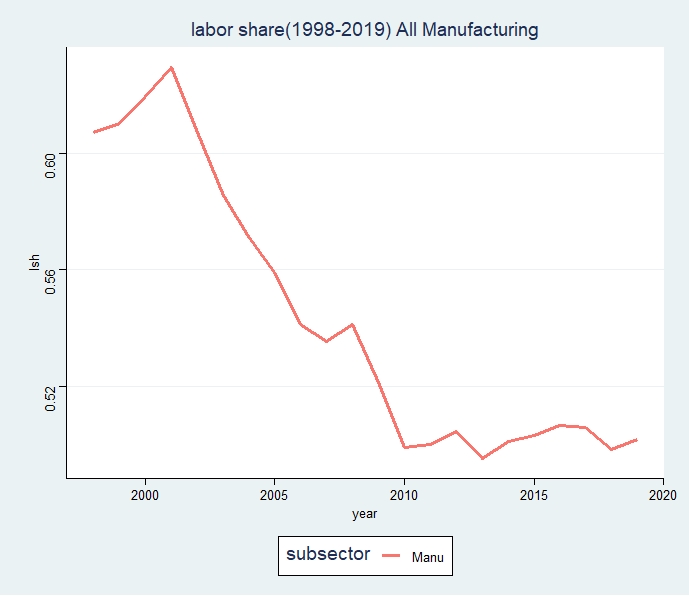
The US manufacturing sector added about 2370.9 bn USD in the year 2019 to the US economy and employed close to 12.5 million laborers. The average annual growth rate of value-added from 1997-2019 was 2.44 and the growth rate of the nominal wage bill was 1.52, which implies that the share of labor in value added declined. Despite the treatment of “Manufacturing” as a sector with similar production technologies or comparable production processes, within manufacturing, there are observable differences within subsectors. For example, certain subsectors claim the largest value-added share and the largest employment share consistently. Figure below shows the decline in labor share in manufacturing.
Figures below show the average employment and value-added shares for different subsectors for the year 2019 and 1997 respectively. From both these figures it is clear that there are some leading subsectors which have higher than average shares. For eg: in 1998 Chemical products(16 %) Computer and Electronic products (13%), Food and tobacco products (10 %) contributed to 33% of manufacturing value added. These sectors combined, employed about 30 % of the total labor(Figure 2.2, the top three employment share curves).
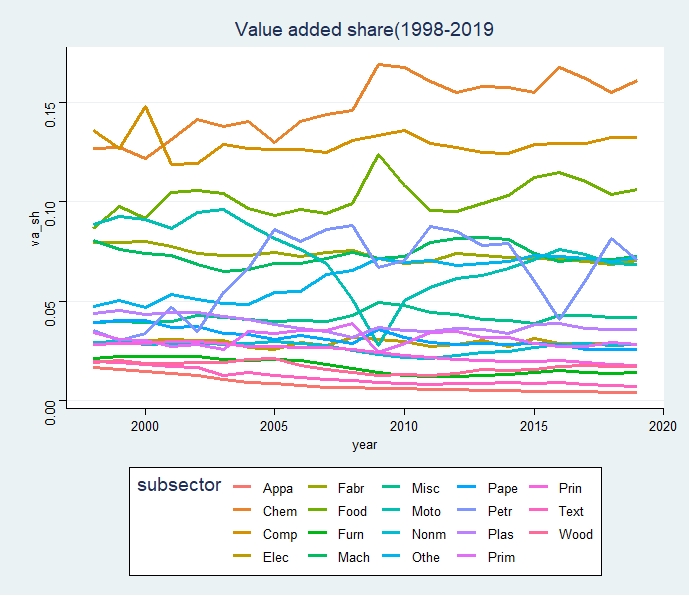
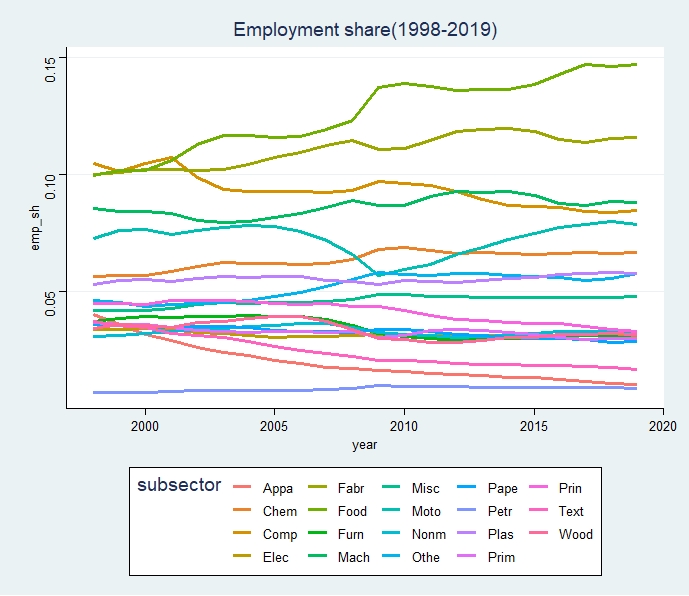
Value added share is also seen to be high for Computers, Chemical products and Machinery. It is interesting to note that domestic labor employed in Petroleum and Coal products is always low.
Figure below shows the price index of subsectors.
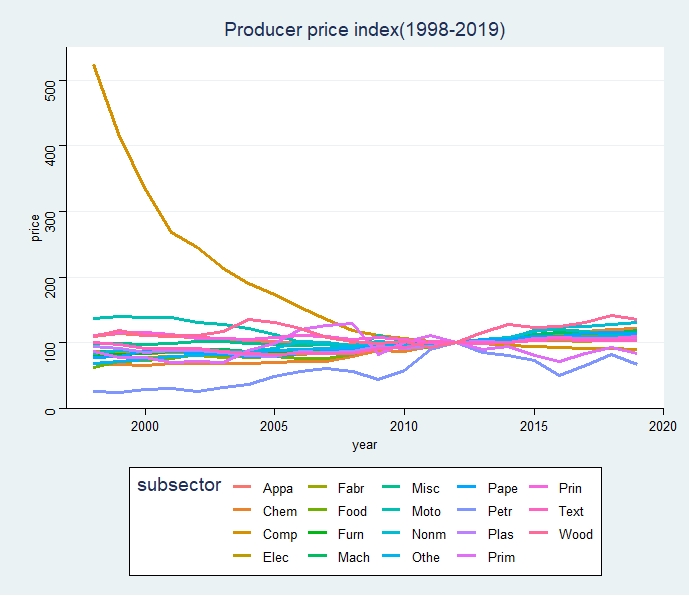
Computer and electronic products have seen the largest decline in prices which is starkly different from other subsectors. Controlling for quality of products, the price decline in this subsector have been very rapid. Later in the document, I discuss why Computer and Electronic products are clear outliers in the manufacturing sector. This sector has also largely been “servicified” with increasing production offshored to other countries.
In short, there are subsectors in the manufacturing sector which deserve specific attention and policies. This brings into question, blanket-level policies which do not take into account the heterogeneity within this broad sector.
 Swayamsiddha Sarangi
Leave a comment